
YMCA History
The Young Men’s Christian Association (YMCA) was founded on 6 June 1844, by George Williams and eleven friends.Williams was a London draper who was typical of the young men drawn to the cities by the Industrial Revolution. They were concerned about the lack of healthy activities for young men in major cities; the options available were usually taverns and brothels. Williams’ idea grew out of meetings he held for prayer and Bible-reading among his fellow workers in a business in the city of London, and on 6 June 1844, he held the first meeting that led to the founding of YMCA with the purpose of “the improving of the spiritual condition of young men engaged in the drapery, embroidery, and other trades.”
The first YMCA premises opened on Great Russell Street, London, in 1844. Anthony Ashley-Cooper, 7th Earl of Shaftesbury served as YMCA’s first president from 1851 until his death in 1885.
By 1845, YMCA started a popular series of lectures that from 1848 were held at Exeter Hall, London, and started being published the following year, with the series running until 1865.
YMCA was associated with industrialisation and the movement of young people to cities to work. YMCA “combined preaching in the streets and the distribution of religious tracts with a social ministry. Philanthropists saw them as places for wholesome recreation that would preserve youth from the temptations of alcohol, gambling, and prostitution and that would promote good citizenship.”
First formed in 1844, at London, it has grown beyond the bounds of expectations. Its field of activities is fairly limitless; however the particular stress is on the Youth. The Red triangle symbolizes the three main aspects of human life & growth (Body, mind and spirit).
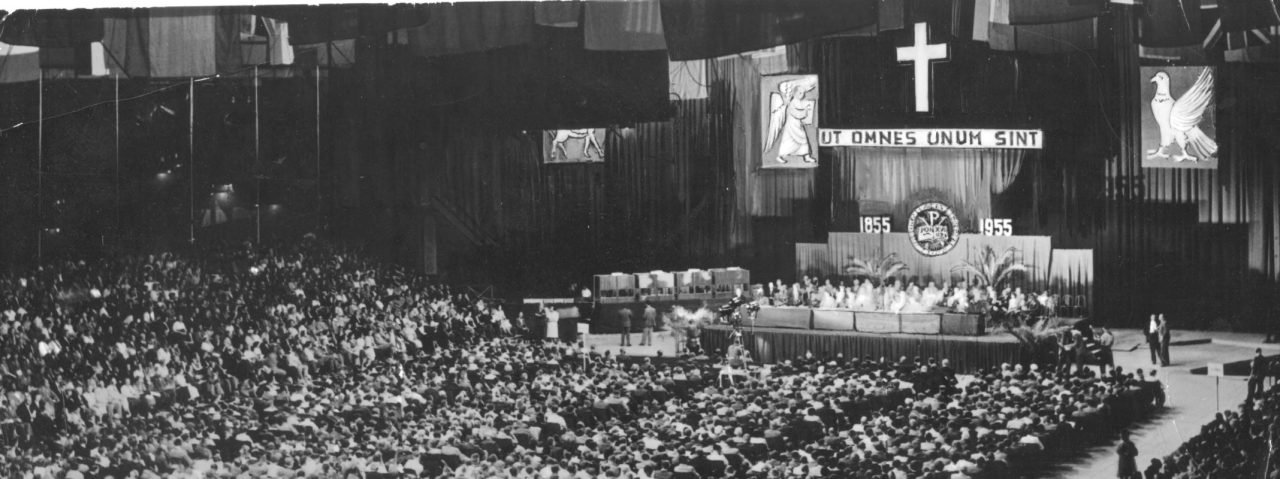
Starting with ‘Paris Basis’ as its guiding principle, formulated in 1854, it has had in due course formulated various other principals, guidelines and mandates to keep up with the times, local situations and related areas of necessary targeted intervention to the society particularly the marginalized and downtrodden sections of the populace. Other aspects which have been put in the priority list are ‘Women’s Empowerment’, ‘Human Rights’ & ‘Interfaith Dialogues’ for peace harmony and just living of any Civil Society.